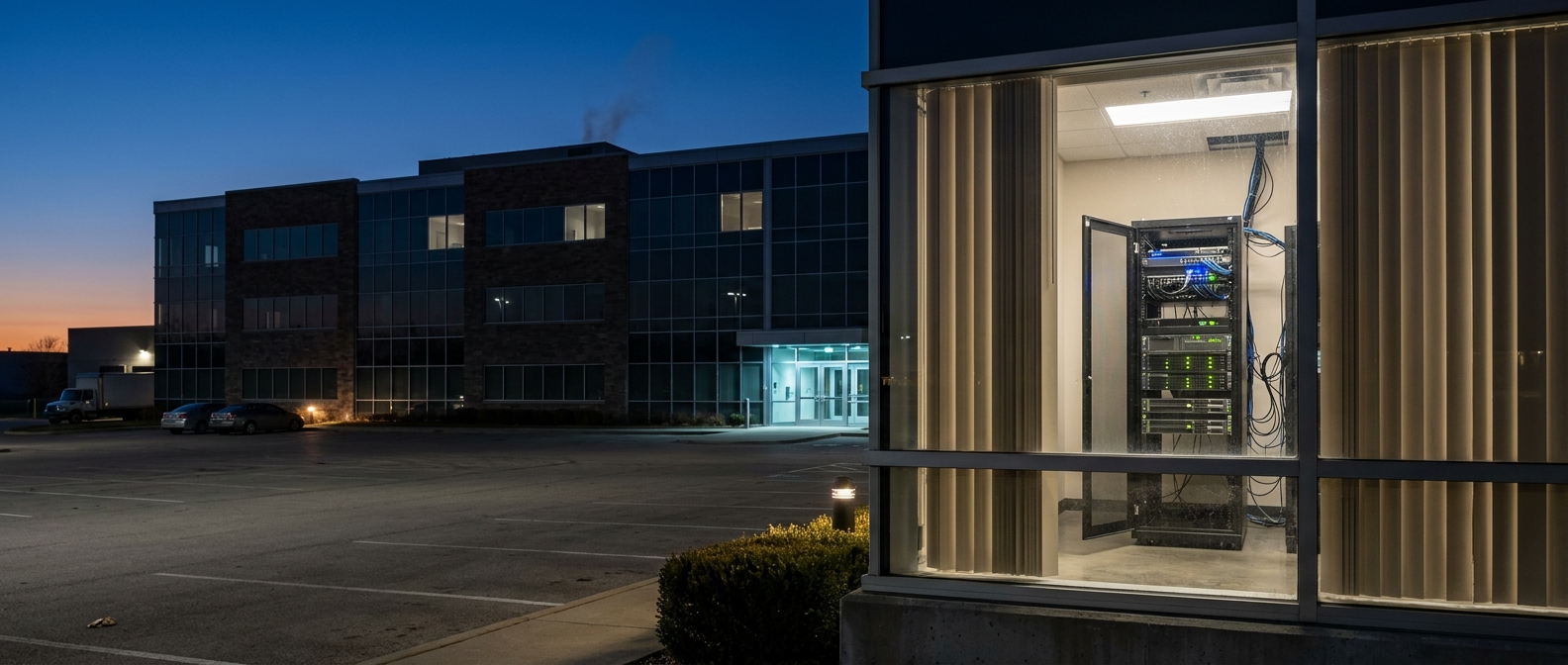
We've walked into a lot of organizations convinced their networks are locked down tight. They have a firewall. They have antivirus and EDR. Maybe they even have a dedicated IT person who reads security bulletins. Then we enter and execute our assessment.
What we find is almost always the same: gaps that no one knew existed, credentials that should have expired years ago, and internet-facing systems that are wide open to anyone who knows where to look. This isn't a criticism, it's just reality. Threats evolve faster than most IT teams can keep up, and visibility into your own environment is harder than it sounds.
Here's what a real security assessment looks like from our side of the table.
The first thing we do is find what you don't know is there.
Step one: we map everything. And we mean everything.
Before we can find vulnerabilities, we need a complete picture of your environment. Using NMAP and advanced network discovery techniques, we footprint every computing asset on your network, and not just the servers you told us about. This includes the forgotten test machine in the corner, the old printer with a web interface, the IoT device someone plugged in two years ago, and the networks you didn't even know were there.
You'd be surprised at how often organizations are missing assets from their own inventory. Shadow IT is real, tribal knowledge gets lost, and attackers will find those assets before your team does if you're not actively looking.
Three layers of vulnerability scanning, not just one
Most pentesters run a scan and hand you a giant document. We run three distinct types of assessments, each designed to catch what the others miss:
- Detailed (non-authenticated) scanning. Using customized Tenable Nessus policies, we probe your network from the same vantage point an attacker would have. Minimal network impact, maximum coverage.
- Authenticated (credentialed) scanning. With privileged credentials, we dive deeper into workstations and servers for an inside-out view. This catches misconfigurations, vulnerabilities, and indicators of compromise that are often invisible to external tools.
- External vulnerability scanning. We target your public attack surface, the part of your environment the entire internet can see. If there's an exploitable service exposed, we'll find it and alert you before an attacker does.
Microsoft environments are a common weak spot
Active Directory is the backbone of most corporate networks, and one of the most-targeted attack surfaces in existence. Our Microsoft Domain Security Analysis covers the full stack:
- Domain configuration and reporting
- User account security and administrative privilege evaluation
- Password strength assessment and identification of compromised credentials
- EntraID (Azure AD) configuration and Microsoft 365 security posture
Password hygiene alone is a recurring nightmare. Weak passwords, shared service accounts, and credentials that haven't been rotated since the Clinton administration are so prevalent we see it constantly. And with our Password Security Analysis we don't just flag "policy non-compliance" in a report: we identify the specific accounts that represent real risk.
A real example.
We found credentials in active use that were originally configured in 2009. The user hadn't logged in since 2017, but the account was still wide open.
Beyond the network: wireless, physical, and zero-day exposure
A comprehensive assessment doesn't stop at your LAN. Our Specialized Security Services cover the full perimeter:
- Wireless network security. Access point configurations, encryption protocols, unauthorized device detection, and guest network isolation.
- Network infrastructure analysis. Firewall configurations, router and switch security, network segmentation, and hardening recommendations that are actually implementable.
- Penetration testing. Real-world attack simulation with exploit verification. We don't just tell you a vulnerability exists; we show you what an attacker could actually do with it.
- Physical security review. Because the best firewall in the world doesn't matter if someone can walk into your server room.
- Malware and zero-day risk assessment. Current threat exposure, publicly available exploits targeting your stack, and APT risk profiling.
Reporting that actually gets used
Here's where a lot of security assessments fall apart: a 400-page technical report gets handed to a CIO, goes onto a shelf, and then nothing changes. We've seen it happen many times before.
That's why we build reports for multiple audiences simultaneously:
- Executive reports. Board of Directors dashboard, executive summaries, and security ratings designed for the people who control the budget.
- Technical reports. Vulnerabilities by IP, by severity, by device, with public exploits flagged, designed for the people who have to fix things.
- Solutions reports. Remediation guidance, STIG compliance tracking, and exception tracking with checklists, designed to drive actual action.
- Comparison and trend analysis. Security is a journey, not a destination. We track your progress over time and help you demonstrate ROI.
Why it matters who does this work
Not all security assessments are created equal. The difference between a checkbox exercise and a genuine security assessment comes down to expertise, methodology, and what happens after the report is delivered.
At Digital Elevation, we bring deep experience in identifying and assessing vulnerabilities, penetration testing, security architecture, and translating our findings into actual risk. We use customized scanning policies designed for thorough coverage with minimal disruption to your operations, because an assessment that takes down your systems isn't helpful to anyone.
And we don't disappear after the report. Ongoing support, remediation guidance, and follow-up assessments are part of how we work. Your data stays confidential throughout, full stop.
Ready to see what's actually in your network?
The organizations that suffer the worst breaches are almost never the ones with the weakest intentions. They're the ones that never looked. A Digital Elevation Security Assessment gives you the visibility to know, and act, before an attacker does.
Request a security assessment arrow_forwardThe Digital Elevation Security Team leads on-site and remote security assessments for clients across 21 states.